01
«Кожа выглядит неровной, бугристой».
Поверхностные вмятины от фиброзных перегородок, тянущих кожу над жировым слоем.
 Записаться
Бугристая, «апельсиновая» текстура на бёдрах, ягодицах и животе - распространённая и в основном структурная. Путь сначала читает ткань, потом работает с жировым слоем и кожей над ним.
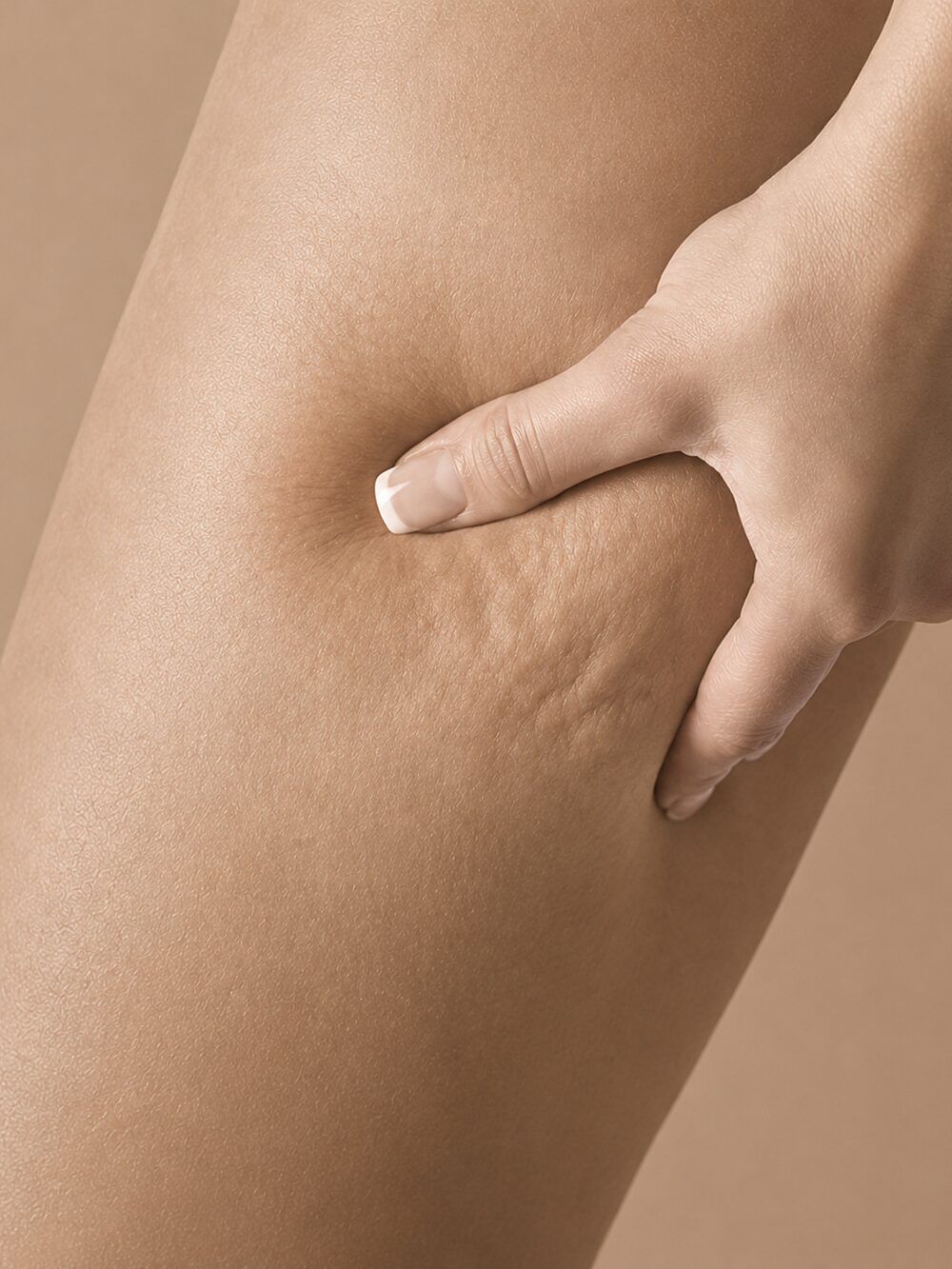 До · Целлюлит заметен
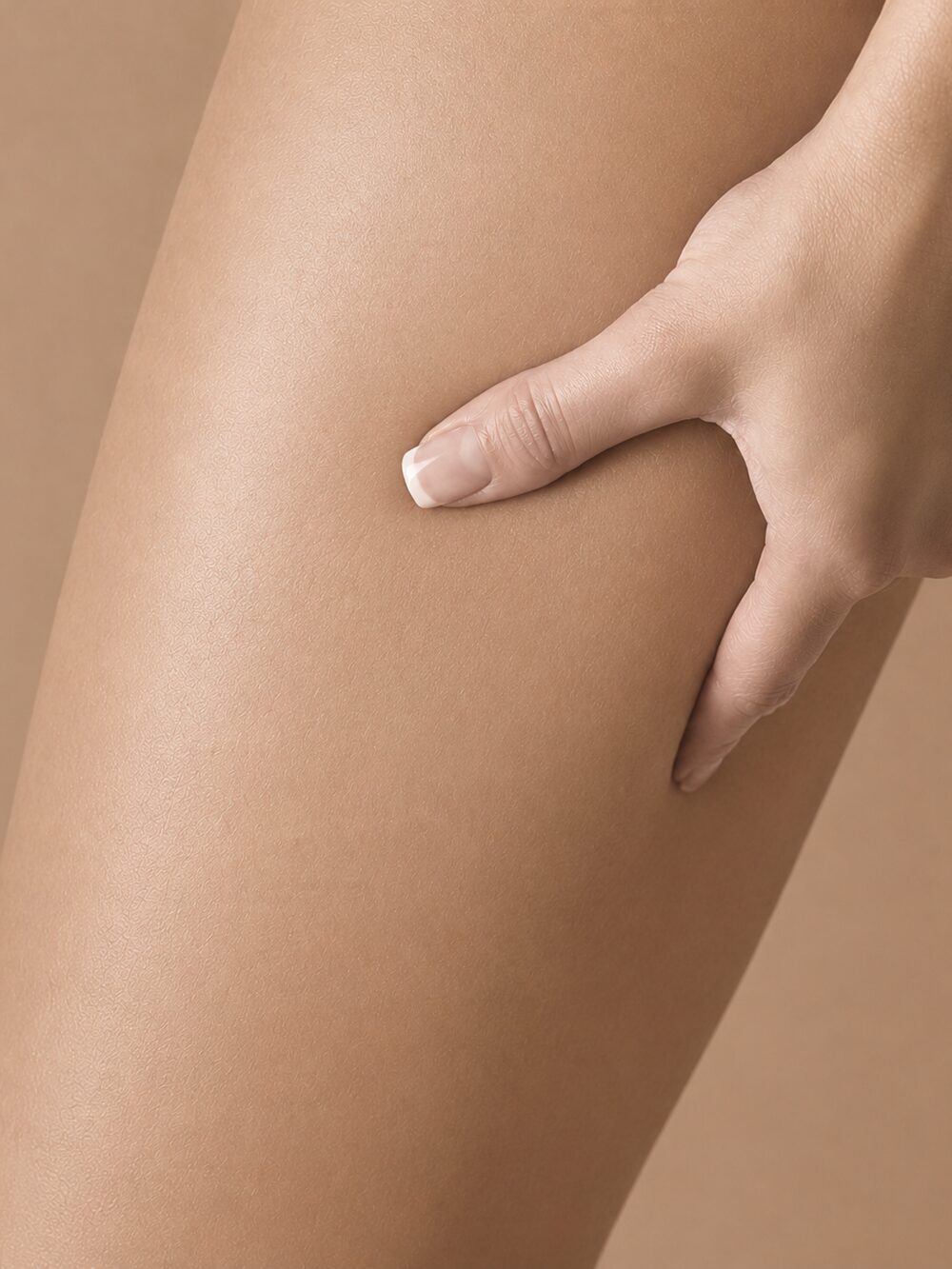 После · Более гладкая
Целлюлит возникает из-за структурных изменений в подкожном жире и соединительнотканных волокнах, удерживающих кожу - придающих поверхности бугристый вид «апельсиновой корки». Чаще всего появляется на бёдрах, ягодицах и животе.
В основном это эстетическая проблема, на которую влияют гормональные, генетические факторы и образ жизни. Поскольку затронуто несколько слоёв, мы оцениваем степень и упругость кожи до выбора пути, а не просто работаем с поверхностью.
"Целлюлит редко связан с весом. Это про архитектуру ткани под кожей - там и работает продуманный путь."
Если два и более пункта вам знакомы, клиническая оценка определит степень целлюлита и подходящий путь.
Поверхностные вмятины от фиброзных перегородок, тянущих кожу над жировым слоем.
Характерная текстура на бёдрах, ягодицах или животе.
Волнистость, заметная в покое, отражающая структуру ткани.
Позиционная бугристость, усиливающаяся от позы и давления.
Снижение упругости в затронутых зонах вместе с изменением текстуры.
Частая, поддающаяся лечению проблема - мы оцениваем степень и подбираем путь.
Редко бывает один фактор. Путь идёт за той причиной, которая наиболее выражена по вашей оценке.
Визит по целлюлиту начинается с клинической оценки - определяется степень, читается упругость кожи и жировой слой. Путь подбирается под степень, а не только под видимую текстуру.
Одна цель: работать с тканью и кожей над ней. Основной протокол уплотняет структурно; поддерживающие пути улучшают циркуляцию и качество кожи.
Радиочастота и импульсная энергия уплотняют ткань и улучшают вид целлюлита в течение курса, без периода восстановления.
Микростимуляция и вакуумный массаж поддерживают дренаж и тонус кожи в затронутых зонах.
Инъекционно · Жировой слойЦелевые инъекции, работающие с локализованным жиром, поддерживающим бугристость.
Аппаратно · УплотнениеRF-микронидлинг подтягивает кожу над жировым слоем для более гладкого результата.
Структурное · Качество кожиБиостимуляторы, формирующие плотность дермы там, где упругость кожи - часть картины.
Специалист Beauté Concept оценивает степень целлюлита, изучает ткань и составляет протокол. Если процедура подходит - планируем, если нет - так и говорим.