01
«Моё лицо очень легко краснеет».
Частые, непропорциональные приливы на незначительные триггеры - самый ранний признак.
 Записаться
Розацеа - хроническое состояние с покраснением лица, видимыми сосудами и воспалительными высыпаниями, усиливается от тепла, солнца, алкоголя и стресса. Путь начинается с диагностики, затем контроль триггеров и целевое лечение.
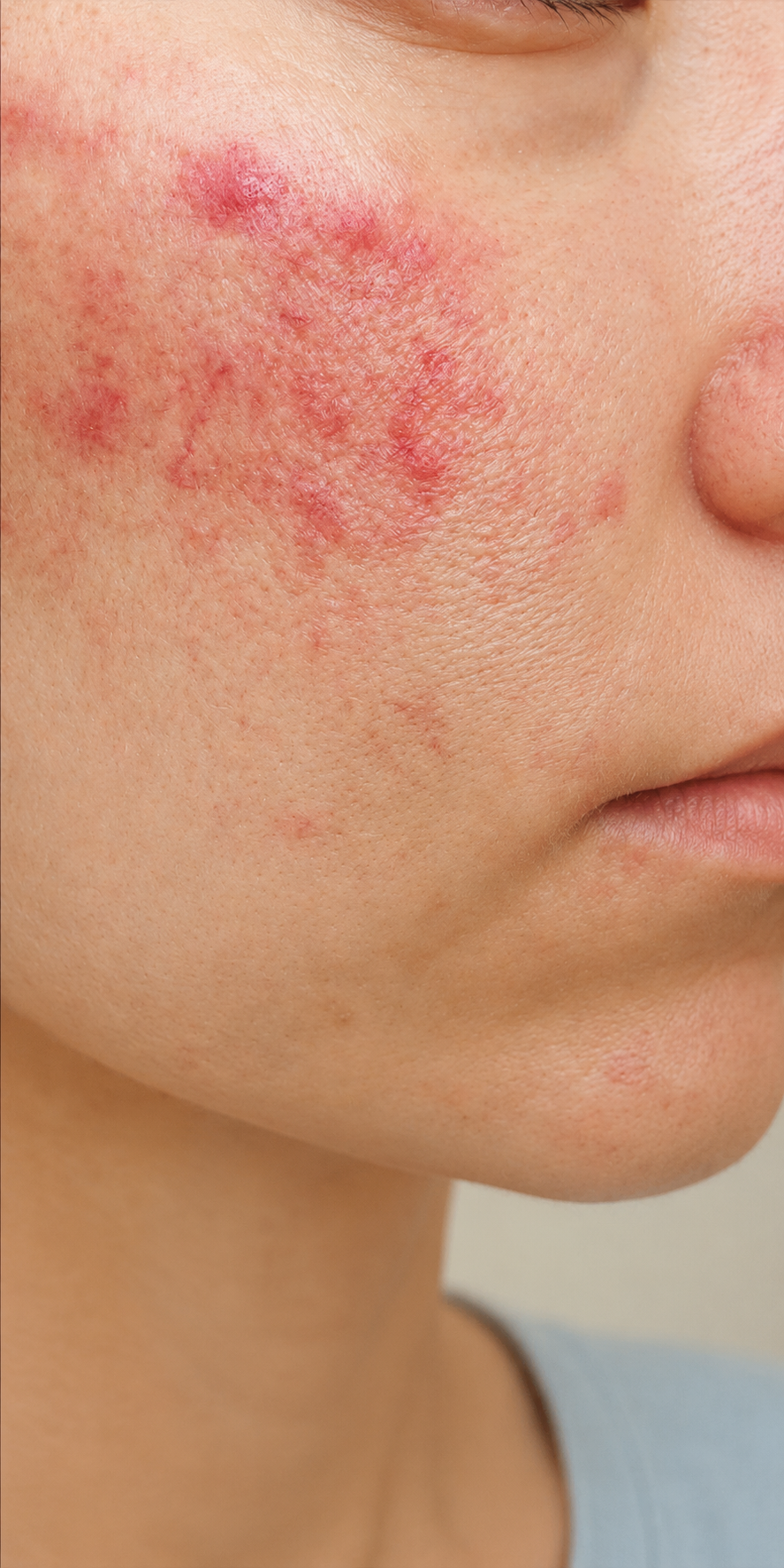 До · Покраснение и сосуды
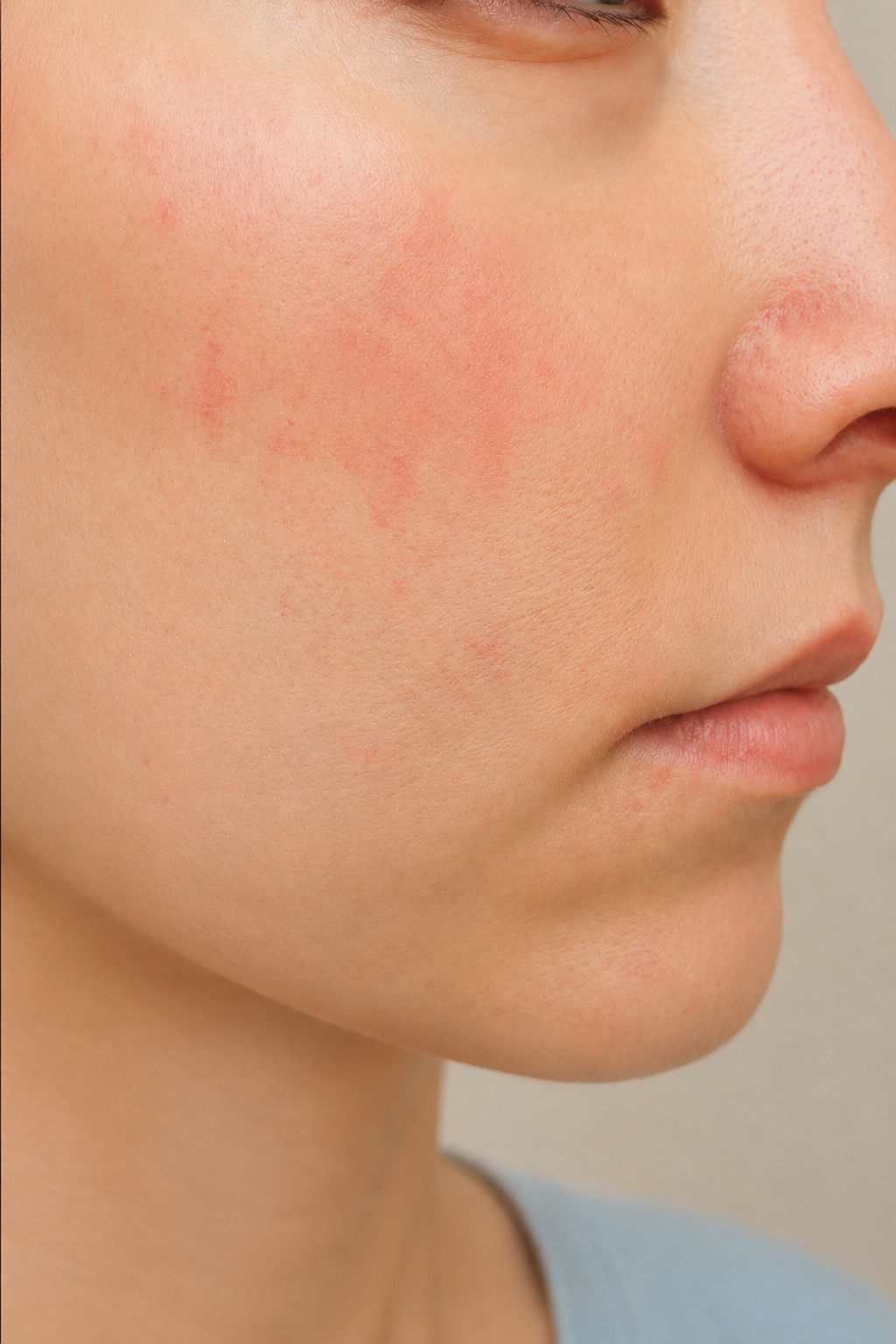 После · Успокоенная кожа
Розацеа - хроническое состояние кожи с покраснением лица, расширением видимых сосудов и воспалительными высыпаниями. Часто усиливается внешними факторами - перепадами температуры, солнцем или стрессом.
Сосудистые изменения связаны с временным или стойким расширением поверхностных сосудов. И то, и другое требует диагностической дифференциации с акне и другими состояниями до лечения.
“Кортикостероиды при розацеа только ухудшают ситуацию. Диагностика до лечения здесь не опция - это защита.”
Симптомы, названные самими пациентами, рядом с клинической оценкой.
Частые, непропорциональные приливы на незначительные триггеры - самый ранний признак.
Покраснение центральной части лица, которое повторяется или не проходит полностью между эпизодами.
Тонкие линейные сосуды на щеках и носу - сосудистый признак.
Сенсорные симптомы без внешней причины - отражают воспаление внутри.
Папулопустулёзный подтип - часто принимают за взрослое акне.
Классические триггеры розацеа - их выявление и избегание - основа лечения.
У розацеа выделены подтипы - путь зависит от того, какой преобладает.
Розацеа диагностируется по паттерну, истории и съёмке, а не только по внешнему виду. Отличать её от акне, себорейного дерматита и волчанки клинически важно.
Управление триггерами - постоянная часть. Наружные и, при показаниях, системные средства работают с папулами; свет и лазер - с сосудами.
Pulsed dye laser и IPL избирательно работают с видимыми сосудами и диффузным покраснением - путь выбора при сосудистом проявлении.
Наружные противовоспалительные средства - долгосрочные и безопасные в большинстве случаев.
Поддерживающее · СистемноеСубантимикробный системный доксициклин при папулопустулёзном подтипе.
Поддерживающее · БарьерГлубокое увлажнение и поддержка барьера параллельно с антисосудистым путём.
Поддерживающее · ТриггерыSPF, контроль тепла и алкоголя - ежедневная практика, удерживающая обострения.
Специалист разбирает паттерн приливов, снимает сосудистый признак и, если картина того требует, направляет к офтальмологу параллельно с лечением, направленным на кожу.