01
«Դեմքս շատ հեշտ է կարմրում»։
Հաճախակի և արտահայտված կարմրություն նույնիսկ թույլ սրող գործոնների ազդեցությամբ․ սա կարող է լինել ռոզացեայի ամենավաղ նշաններից մեկը։
 Ամրագրել
Ռոզացեան քրոնիկ մաշկային վիճակ է, որը բնութագրվում է դեմքի կարմրությամբ, տեսանելի անոթներով և բորբոքային ցանավորմամբ։ Այն կարող է սրվել ջերմության, արևի, ալկոհոլի և սթրեսի ազդեցությամբ։ Մոտեցումը սկսվում է ախտորոշումից, որից հետո վերահսկվում են սրող գործոնները և ընտրվում նպատակային բուժում։
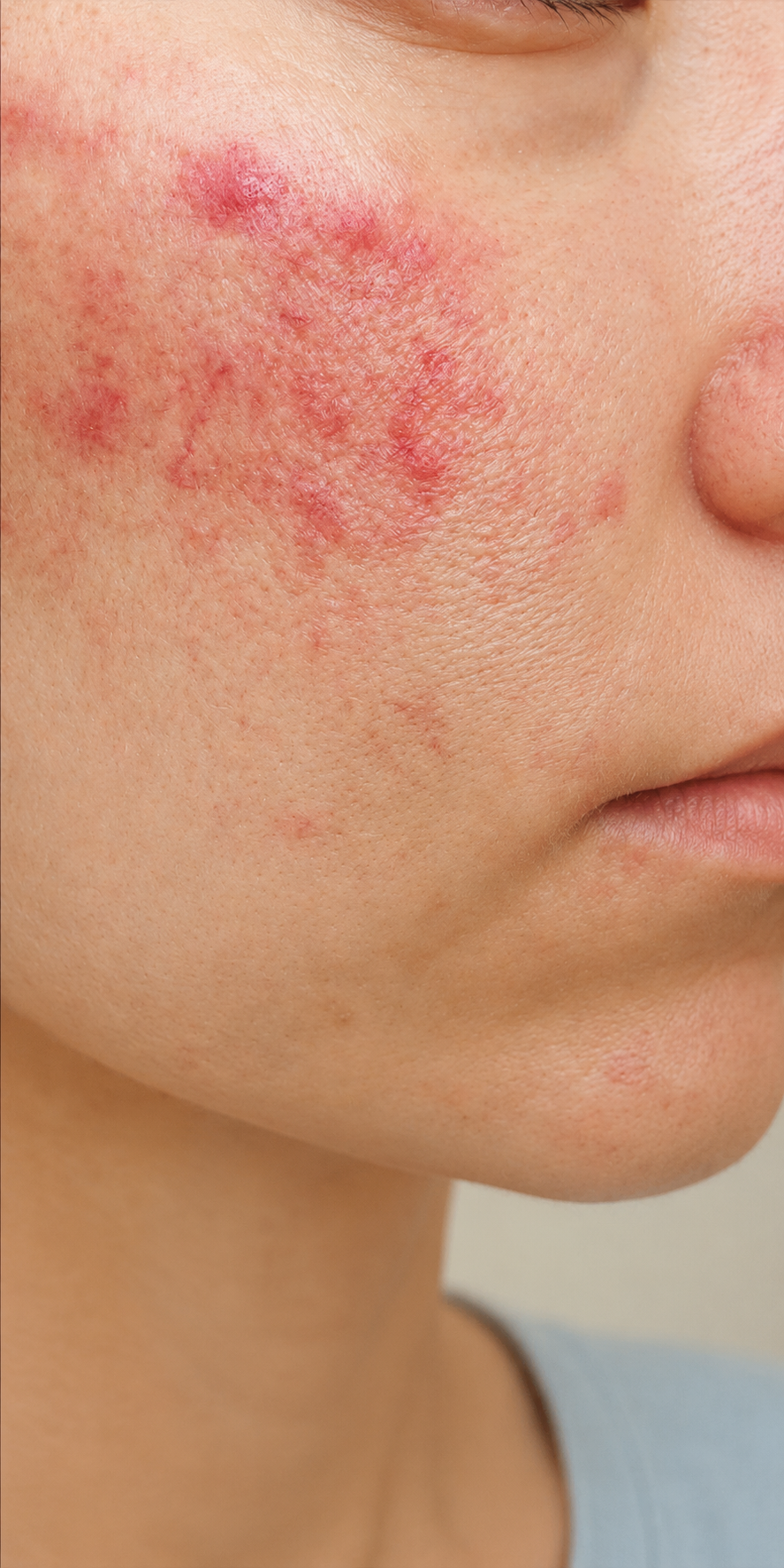 Առաջ · Կարմրություն և տեսանելի անոթներ
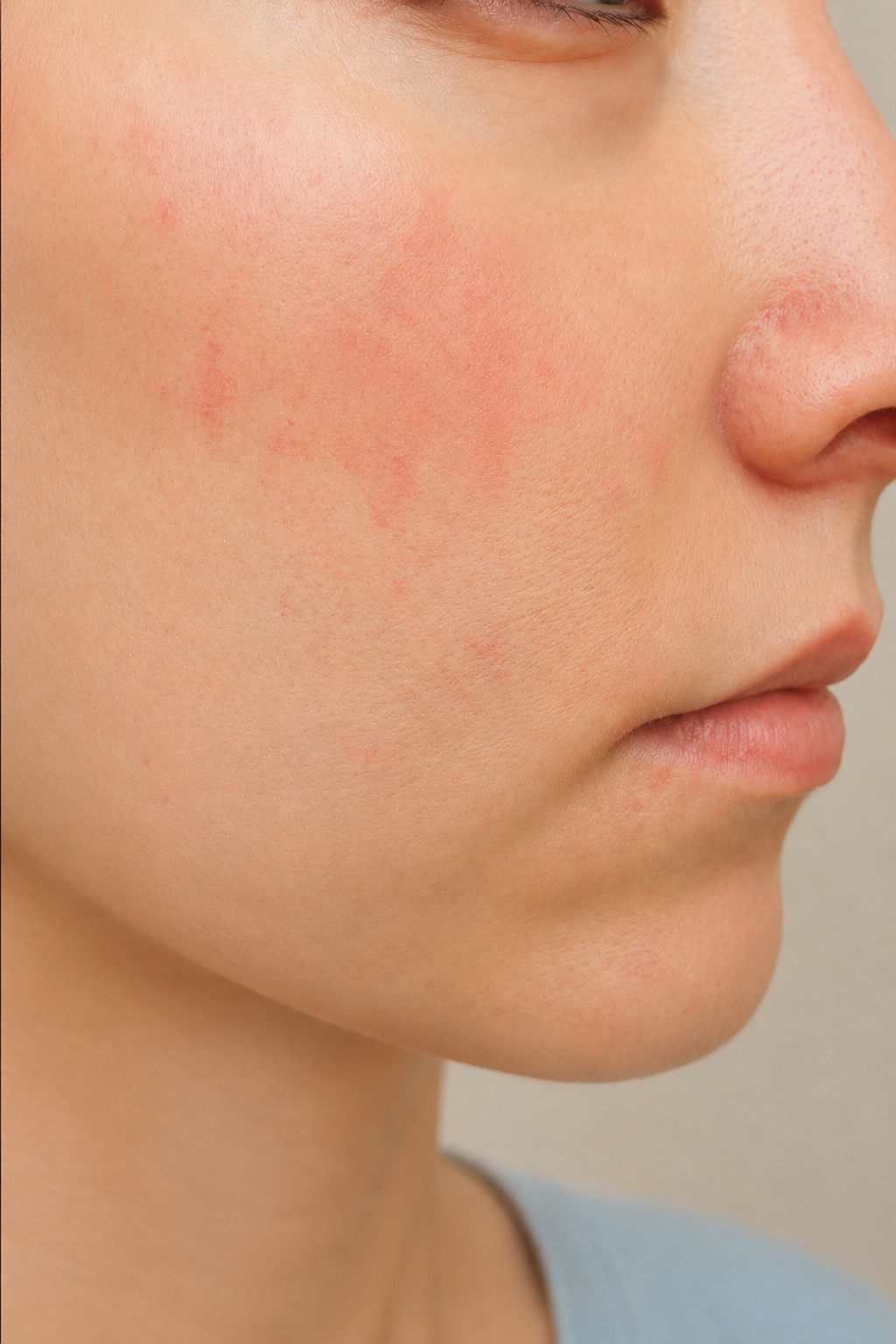 Հետո · Հանգստացած մաշկ
Ռոզացեան մաշկի քրոնիկ հիվանդություն է, որը բնութագրվում է դեմքի կարմրությամբ, տեսանելի արյունատար անոթների լայնացմամբ և բորբոքային ցանավորմամբ։ Այն հաճախ սրվում է արտաքին գործոնների ազդեցությամբ՝ ջերմաստիճանի փոփոխություններից, արևից կամ սթրեսից։
Անոթային փոփոխությունները առաջանում են մաշկի մակերեսային արյունատար անոթների ժամանակավոր կամ կայուն լայնացման հետևանքով։ Բուժումը սկսելուց առաջ կարևոր է տարբերակել դրանք ակնեից և նմանատիպ այլ մաշկային վիճակներից։
“Ռոզացեայի դեպքում կորտիկոստերոիդների սխալ կիրառումը կարող է վատթարացնել վիճակը։ Այստեղ ճիշտ ախտորոշումը ոչ թե պարզապես ցանկալի է, այլ կարևոր է անվտանգ բուժման համար։”
Պացիենտների նկարագրած նշանները համադրում ենք մաշկի կլինիկական գնահատման հետ։
Հաճախակի և արտահայտված կարմրություն նույնիսկ թույլ սրող գործոնների ազդեցությամբ․ սա կարող է լինել ռոզացեայի ամենավաղ նշաններից մեկը։
Դեմքի կենտրոնական հատվածի կարմրություն, որը պարբերաբար կրկնվում է կամ ամբողջությամբ չի անցնում դրվագների միջև։
Բարակ գծային անոթներ, որոնք առավել հաճախ տեսանելի են այտերի և քթի հատվածում և բնորոշ են ռոզացեայի անոթային ձևին։
Այրոցի, ծակծկոցի կամ տաքության զգացողություն՝ առանց ակնհայտ արտաքին պատճառի, որը կարող է կապված լինել հիմքում ընկած բորբոքման հետ։
Պապուլոպուստուլյոզ ձև, որը հաճախ շփոթվում է մեծահասակների ակնեի հետ։
Սրանք ռոզացեայի ամենատարածված սրող գործոններից են։ Դրանց հայտնաբերումն ու հնարավորինս սահմանափակումը բուժման կարևոր մասն են։
Ռոզացեան ունի տարբեր կլինիկական ձևեր, և բուժման ծրագիրը կախված է նրանից, թե դրանցից որն է առավել արտահայտված։
Ռոզացեայի ախտորոշումը հիմնվում է կլինիկական պատկերի, բժշկական պատմության և մաշկի հետազոտության վրա, ոչ միայն արտաքին տեսքի։ Կարևոր է այն տարբերակել ակնեից, սեբորեային դերմատիտից և գայլախտի որոշ դրսևորումներից։
Սրող գործոնների վերահսկումը բուժման մշտական մասն է։ Տեղային, իսկ անհրաժեշտության դեպքում՝ համակարգային բուժումը կիրառվում է բորբոքային տարրերի համար, իսկ լուսային և լազերային տեխնոլոգիաները՝ կարմրության ու տեսանելի անոթների նվազեցման համար։
Պուլսային ներկանյութային լազերը և IPL տեխնոլոգիան ընտրողաբար ազդում են տեսանելի անոթների և տարածուն կարմրության վրա և առավել հաճախ կիրառվում են ռոզացեայի անոթային դրսևորումների դեպքում։
Տեղային հակաբորբոքային միջոցներ, որոնք կարող են կիրառվել երկարաժամկետ բուժման ծրագրի շրջանակում՝ ըստ բժշկի ցուցման։
Լրացուցիչ · Համակարգային բուժումՑածր դեղաչափով համակարգային դոքսիցիկլին՝ պապուլոպուստուլյոզ ռոզացեայի բորբոքային դրսևորումները վերահսկելու համար։
Լրացուցիչ · Պաշտպանիչ շերտԽորը խոնավեցում և մաշկի պաշտպանիչ շերտի աջակցություն՝ անոթային բուժմանը զուգահեռ։
Լրացուցիչ · Սրող գործոններԱմենօրյա SPF պաշտպանություն, գերտաքացումից խուսափում և ալկոհոլի սահմանափակում՝ սրացումների հաճախականությունը նվազեցնելու համար։
Մասնագետը կգնահատի Ձեր կարմրության և սրացումների բնույթը, կուսումնասիրի անոթային փոփոխությունները և, անհրաժեշտության դեպքում, մաշկային բուժմանը զուգահեռ կուղղորդի նաև ակնաբույժի խորհրդատվության։