01
«Մաշկիս երանգը անհավասար է»։
Դեմքի տարբեր հատվածներում երանգը միատարր չէ, ինչը հատկապես նկատելի է բնական լույսի ներքո։
 Ամրագրել
Պիգմենտի անհավասար բաշխման պատճառով մաշկի որոշ հատվածներ կարող են ավելի մուգ կամ ավելի բաց երևալ։ Դրա պատճառ կարող են լինել արևի ազդեցությունը, բորբոքային գործընթացներն ու հորմոնալ փոփոխությունները։ Մոտեցումը սկսվում է ախտորոշումից, որից հետո ընտրվում է նպատակային շտկման անհատական ծրագիր։
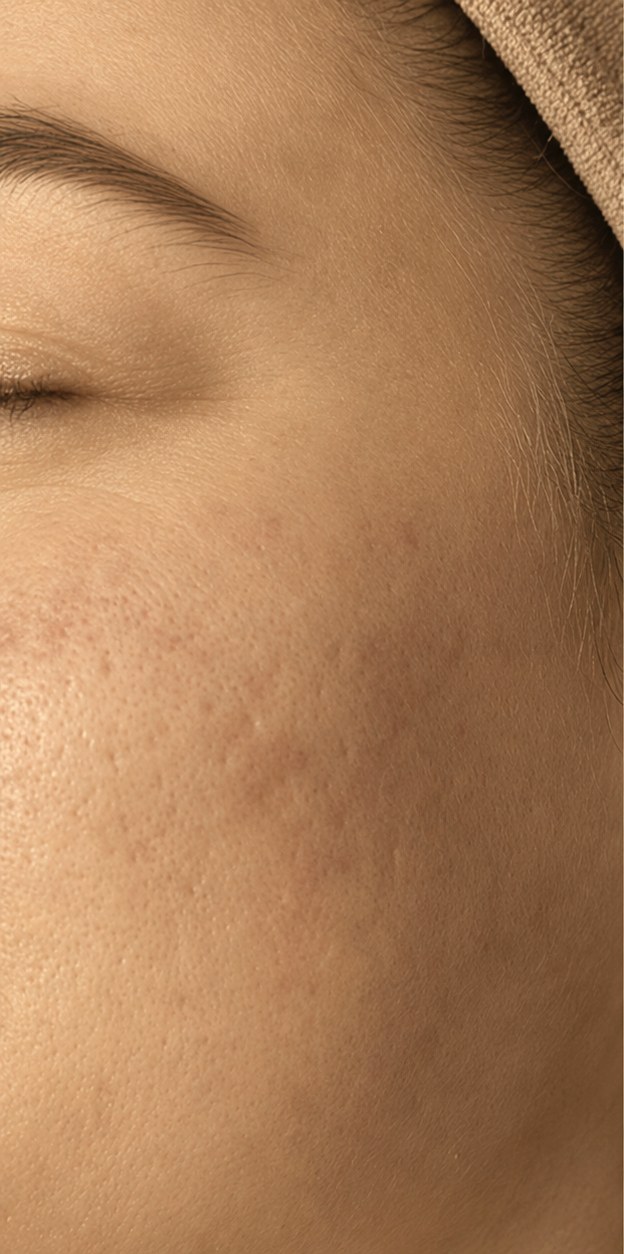 Առաջ · Անհավասար պիգմենտացիա
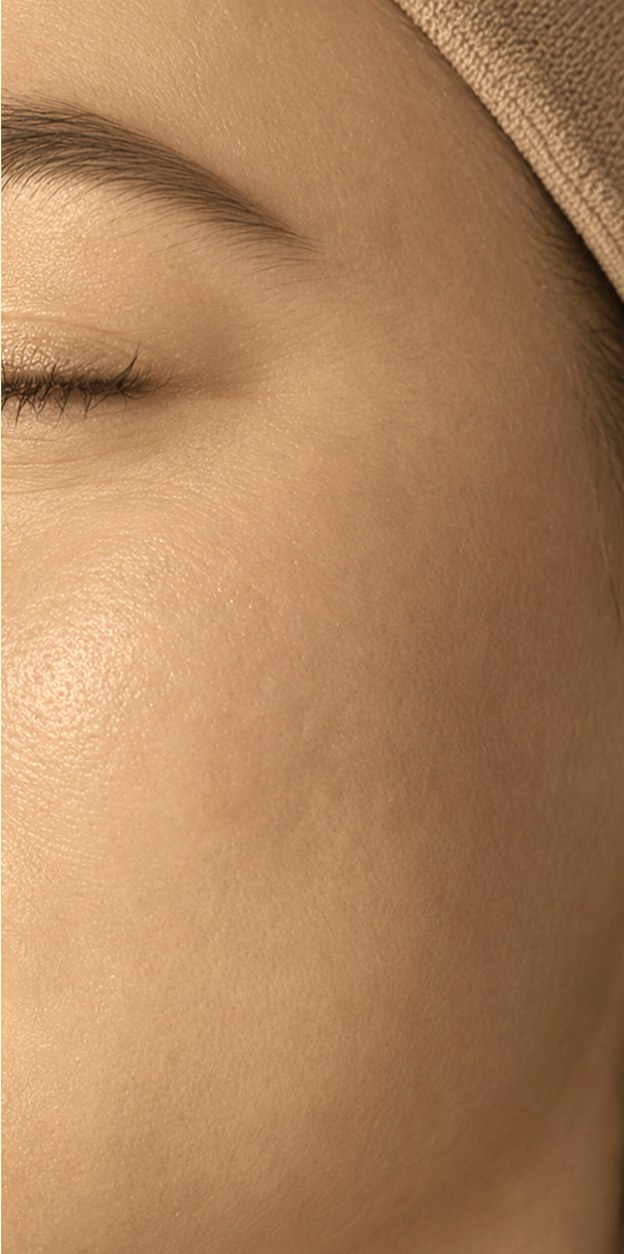 Հետո · Վերականգնված հավասար երանգ
Մաշկի անհավասար երանգը բնութագրվում է մաշկի գույնի ոչ միատարր բաշխմամբ, երբ որոշ հատվածներ շրջակա մաշկից ավելի մուգ կամ ավելի բաց են երևում։ Այն կարող է առաջանալ արևի ազդեցության, բորբոքային գործընթացների կամ հորմոնալ փոփոխությունների հետևանքով։
Արդյունքում մաշկը կորցնում է իր հավասար և միատարր տեսքը։ Բնական լույսի ներքո տարբեր հատվածներն ավելի նկատելի են դառնում, իսկ դիմահարդարումը կարող է անհավասար նստել։ Առանց համապատասխան խնամքի պիգմենտային հետքերը կարող են ավելի արտահայտված դառնալ արևի շարունակական ազդեցության պայմաններում։
“Արդյունքը պահպանելու համար արևապաշտպանությունը պետք է դառնա ամենօրյա սովորություն։ Առանց դրա պիգմենտացիայի ցանկացած շտկման ծրագիր կարող է կորցնել իր արդյունավետությունը։”
Պացիենտների նկարագրած նշանները համադրում ենք մաշկի կլինիկական գնահատման հետ։
Դեմքի տարբեր հատվածներում երանգը միատարր չէ, ինչը հատկապես նկատելի է բնական լույսի ներքո։
Մելանինի տեղային կուտակումներ, որոնք առավել հաճախ նկատվում են այտերի, ճակատի և վերին շրթունքի հատվածում։
Թաքնված բորբոքային գործընթացները ժամանակի ընթացքում կարող են նպաստել երանգի փոփոխության և հետագա պիգմենտացիայի առաջացմանը։
Ակնեից հետո մնացած պիգմենտային հետքեր, որոնք բաց մաշկի դեպքում հաճախ շագանակագույն են, իսկ ավելի մուգ մաշկի դեպքում՝ ավելի արտահայտված։
Անհավասար և բծավոր երանգ, որն առավել հաճախ նկատվում է արևի ազդեցությունից կամ սթրեսից հետո։
Քողարկող միջոցները պիգմենտացված հատվածներում կարող են ավելի նկատելի լինել՝ ընդգծելով մաշկի անհավասար երանգը։
Տարբեր պատճառները պահանջում են տարբեր մոտեցումներ, այդ պատճառով նախ որոշում ենք պիգմենտացիայի տեսակը, ապա ընտրում բուժման ծրագիրը։
Մաշկի անհավասար երանգի դեպքում յուրաքանչյուր ծրագիր սկսվում է կլինիկական խորհրդատվությունից և VISIA վերլուծությունից։ Առանց ճիշտ ախտորոշման հնարավոր չէ հստակ որոշել, թե որ մոտեցումն է անհրաժեշտ հենց Ձեր մաշկին։
Մոտեցումը ներառում է տնային խնամք, կլինիկայում իրականացվող նպատակային պրոցեդուրաներ և արևապաշտպանություն՝ ամբողջ ծրագրի ընթացքում։
Վիտամին C-ն, նիացինամիդը և մասնագիտական ռետինոիդները ձևավորում են տնային խնամքի հիմքը, իսկ սալիցիլային և TCA պիլինգները սեանս առ սեանս օգնում են նվազեցնել կուտակված պիգմենտացիան։
Ֆրակցիոն և պիգմենտի նկատմամբ ընտրողական սարքերը ուղղակիորեն աշխատում են տեղային պիգմենտացիայի վրա։
Լրացուցիչ · ԽոնավեցումԽորը խոնավեցում և մաշկի պաշտպանիչ շերտի աջակցություն՝ պիգմենտացիայի շտկմանը զուգահեռ։
Լրացուցիչ · Մաշկի որակՀիալուրոնաթթու՝ մաշկի ընդհանուր որակը, կառուցվածքն ու լույսի բնական անդրադարձը բարելավելու համար։
Լրացուցիչ · ՓայլՎիտամինային բաղադրիչներ, որոնք օգնում են բարելավել մաշկի ընդհանուր երանգն ու պայծառությունը։
Մասնագետը կուսումնասիրի Ձեր պիգմենտացիայի պատմությունը, կկատարի VISIA վերլուծություն և կկազմի անհատական ծրագիր՝ համապատասխան մաշկի երանգի անհավասարության տեսակին և պատճառին։